Sunday, October 18, 2020

DAY 13 of #100daysofJesus - Forgiveness


DAY 13 of #100daysofJesus
In the Sermon on the Mount, one challenging doctrine that Jesus taught was forgiveness. This message would be repeated throughout his ministry. Jesus taught: "For if ye forgive men their trespasses, your heavenly Father will also forgive you: But if ye forgive not men their trespasses, neither will your Father forgive your trespasses."
Paul reemphasized this message to the Ephesians, "And be ye kind to one another, tenderhearted, forgiving one another, even as God for Christ's sake hath forgiven you."
Peter once asked Jesus how many times he needed to forgive someone. Perhaps it seemed unreasonable to him to continuously forgive someone over and over. It could be seen as weak or permissive. Jesus' response was "until seventy times seven," which essentially means to always forgive.
Jesus revealed to the prophet Joseph Smith that if we do not forgive, the greater sin remains in us. Ouch!
When we refuse to forgive others for their offenses against us, we mock God because He gave His only begotten Son so that we might be forgiven of our offenses. How can we hope to receive forgiveness if we can't bring ourselves to forgive others?
Through Joseph Smith, Jesus commanded, "I, the Lord, will forgive whom I will forgive, but of you it is required to forgive all men." He goes on to say that we should let God be the judge by offering forgiveness.
I once heard that withholding forgiveness from someone is like drinking poison and hoping for the other person to die.
When we are wronged, it is easy to become bitter or angry; that's the natural reaction and a common trial of mortality. We must choose to follow Jesus and rely on His strength. We can pray for divine help in this process. That's why Jesus included "forgive us our debts, as we forgive our debtors" in the prayer he shared with his disciples.
We must forgive, and with Jesus' help, we CAN forgive. God will help us, and we will be so much happier for it.

Saturday, October 17, 2020

DAY 12 of #100daysofJesus - Why He Died for Us


DAY 12 of #100daysofJesus
Why did Jesus come to earth and die for us?
Many long books have been written on this topic (in addition to the scriptures), so I'll simply summarize my understanding here. This is based on what Jesus said to the Nephites at the end of His post-resurrection ministry among them, as recorded in 3 Nephi 27 of the Book of Mormon, Another Testament of Jesus Christ.
Very simply put, Jesus came to make it possible for us to (1) conquer death and (2) conquer sin.
CONQUERING DEATH
Jesus taught the people: "And my Father sent me that I might be lifted up upon the cross; and after that I had been lifted up upon the cross, that I might draw all men unto me, that as I have been lifted up by men even so should men be lifted up by the Father."
The symbolism is powerful. On the cross, he was risen up just as he would rise up three days later from the tomb. Jesus conquered death, which had been introduced into the world with the fall of Adam and Eve. Because of Jesus' dual-nature, being God, he was able to overcome death, a triumph no human could do alone.
Because He broke the bands of death, all mankind will also be lifted up, rising to stand in judgement as resurrected people. Without Jesus, our eternal progress was damned, but because of Jesus, ALL PEOPLE WILL LIVE AGAIN. What hope and joy this doctrine brings to know that death is not the end.
And Jesus taught in John 5:29 that ALL will be resurrected, the good and the evil.
CONQUERING SIN
Jesus taught that "no unclean thing can enter into his kingdom; therefore nothing enters into his rest save it be those who have washed their garments in my blood, because of their faith, and the repentance of all their sins, and their faithfulness unto the end."
No one on this earth has lived a sinless life save Jesus only. Simply put, the stain of sin prevents us from returning to God's heavenly home. This chasm between us in our unclean state and the perfection demanded to enjoy God's presence is also bridged by Jesus' atoning sacrifice.
The difference between this and the victory over death is that sanctification is not a free gift available without effort on our part. Otherwise, what would the decisions made in this life matter? Jesus mentions faith, repentance, and faithfulness to the end as requirements. In the following verse He clearly tells us what He expects of us:
"Now this is the commandment: Repent, all ye ends of the earth, and come unto me and be baptized in my name, that ye may be sanctified by the reception of the Holy Ghost, that ye may stand spotless before me at the last day."
To summarize, we must have faith (believe in Jesus), repent (change by turning our hearts to Jesus), be baptized (a commitment to follow Jesus), receive the Holy Ghost (a gift from Jesus), and live faithfully to the end of our lives (as disciples of Jesus). He requires us to live a Christian life, which doesn't mean living perfect; it means living intentionally, striving to follow Him as His disciple. The reward for such discipleship is eternal life.
I invite you to send me a note if you have questions or want to learn more. Of all my religious belief, this doctrine about Jesus' sacrifice is the most sacred and important to me.
Jesus loves you. That love is why he made His great sacrifice for you. You are worth it. If you choose to follow Him, you will never regret it - great things are in store!

Friday, October 16, 2020

DAY 11 of #100daysofJesus - Great Are the Words of Isaiah


DAY 11 of #100daysofJesus
"Great are the words of Isaiah."
This was said by Jesus when he was among the Nephites, as recorded in 3 Nephi 23 in the Book of Mormon. Jesus quoted extensively from the prophet Isaiah's writings and commanded the people to "search these things diligently." (I'm not sure why that command wouldn't also apply to us today!) Jesus explained that Isaiah "spake as touching all things concerning my people" and that "all things that he spake have been and shall be."
Jesus quotes Isaiah several times in the New Testament where Isaiah is also quoted by the Apostles at least 40 times. Other Book of Mormon prophets, such as Nephi and Jacob, also quote extensively from Isaiah.
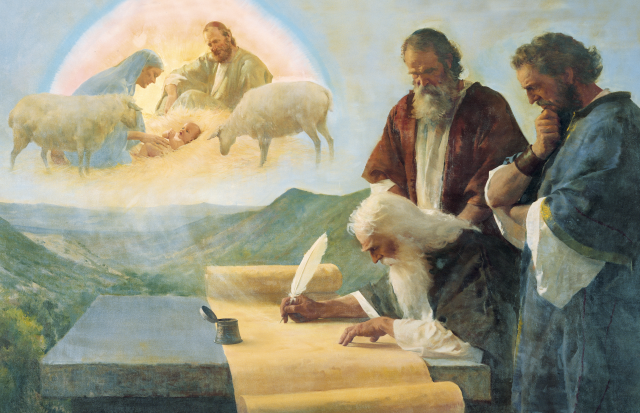
As one of the greatest prophets of the Old Testament, Isaiah saw in vivid vision the life and death of the Messiah as well as the events of the imminent scattering and eventual latter-day gathering of Israel. He saw the last days, in which we now live, and the events that would lead up to Jesus' return. More importantly, he wrote it all down!
The challenge comes in actually understanding what Isaiah wrote:
"A major difficulty in understanding the book of Isaiah is his extensive use of symbolism, as well as his prophetic foresight and literary style; these take many local themes (which begin in his own day) and extend them to a latter-day fulfillment or application. Consequently, some prophecies are probably fulfilled more than one time and have more than one application." (from Guide to the Scriptures)
As is true with all scripture, and especially with Isaiah, it can best be understood through the same Spirit with which it was written. There are also many resources available to help us understand these writings. Bruce R McConkie taught that "the Book of Mormon prophets interpreted the passages [of Isaiah] they used" and that as a result, "the Book of Mormon is the world's greatest commentary on the book of Isaiah."

If we will put in the effort to study and really seek to understand his words, our love for and knowledge of Jesus Christ will increase because Isaiah's prophesies center upon Him as the promised Messiah. We'll also have a better perspective about the events transpiring in these latter-days and greater confidence. We'll see how our day fits into God's plan for us, including the importance of the gathering of Israel.

Thursday, October 15, 2020

DAY 10 of #100daysofJesus - Casting Out Devils


DAY 10 of #100daysofJesus
Jesus Christ is more powerful than Satan. In Day 3 I described how He had power to overcome all of the temptations that the adversary threw his way. Today I'll share two examples from the New Testament where Jesus exercised his priesthood power to cast out devils or unclean spirits from suffering people.
One such miracle occurred when a man was brought to him who suffered from three afflictions: possessed with a devil, blind, and dumb. I can't imagine the misery this man must have endured and the challenge he surely must have been to his family and friends. He and they must have lived in a state of constant fear and uncertainty. The news of a man capable of miracles gave them hope and the courage to seek out Jesus. In faith they came to Jesus seeking a miracle.
Jesus is compassionate and takes pleasure in healing. He is the Master Healer and will heal all who come unto Him. It was no different with this man. Matthew records, "and he healed him, insomuch that the blind and dumb both spake and saw. And all the people were amazed, and said, is not this the Son of David?"
The second example I want to share is His healing of Mary Magdalene. This healing is powerfully portrayed in Episode 1 of the show The Chosen (you can watch for free on VidAngel or BYUtv and I highly recommend this amazing tv series!).
In Luke 8 we read of "certain women" who were disciples of Jesus after having been "healed of evil spirits and infirmities." Mary was one of these women. According to Luke Jesus cast "seven devils" out of Mary. She became one of his closest friends and disciples, fully devoted to Him and His ministry from that time forth, even being the first to see the Resurrected Lord.
What can we learn from these events?
One lesson we learn is that Jesus is all powerful and able to work mighty miracles in people's lives. No challenge that you or I am struggling with is beyond Jesus' power to heal and help.
We also learn of Jesus' willingness to heal. Not only is He capable of miracles but He wants to perform them in our lives. This should fill us with hope and help us turn to Him in faith for the miracles and healing we all need in our daily lives.
I've seen that healing firsthand, both of physical and mental ailments, and I continue to witness Jesus' power and willingness to heal in my own life and in the lives of those I know. It's real and it's lifechanging!

Wednesday, October 14, 2020

DAY 9 of #100daysofJesus - Gathering of Israel


DAY 9 of #100daysofJesus

One of my core beliefs is that prior to the Second Coming of Jesus Christ to the earth, scattered Israel (the people not the country) will literally be gathered as foretold by many Old Testament prophets and by Jesus himself. What many may not know is that this gathering has already started and is moving forward with haste.

The Old Testament contains the history of the scattering of Israel and the promises God made to Israel, including their eventual gathering. The New Testament, by comparison, contains very little on this topic; however, one scripture that did stand out to me was Paul's teaching to the Ephesians that "in the dispensation of the fulness of times [God] might gather together in one all things in Christ, both which are in heaven, and which are on earth; even in him."

We live in the dispensation of the fulness of times, and this gathering is happening now, both in heaven and on earth.

When Jesus appeared to the Nephite people in the Americas following his resurrection, as recorded in the Book of Mormon, he taught the people extensively about the future gathering of Israel. He made it clear that the Nephites were a remnant of the House of Israel (through the lineage of Joseph) and that their posterity would not be forgotten.

This topic continues to be an important teaching of modern day prophets, including Russell M Nelson, God's prophet on the earth today.

Let me discuss a couple of the ways the gathering of Israel is taking place today.

Many are familiar with the missionaries from the Church of Jesus Christ of Latter-day Saints that are found in all parts of the globe wearing black name tags, traveling two by two, and teaching the gospel of Jesus Christ. I don't have the most recent numbers, but as of 2013, there were missionaries in 189 of the 224 nations of the world. This missionary work is a huge component of the effort to gather Israel.

A lesser known, but equally important, aspect of the gathering is on the other side of the veil in the Spirit World, where we believe the spirits of those who have died continue to live in anticipation of their resurrection. To assist, we do family history work to learn of and seek out our ancestors, and then to perform vicarious ordinances for them in our holy temples.

The rising popularity of genealogical research in recent years, aided by products from organizations like Ancestry, MyHeritage, and FamilySearch, is an important part of this work. The FamilySearch shared family tree alone has more than 1.2 billion people in it, made possible by millions of contributors. Technologies like the Internet and machine learning are greatly aiding this work.

And as foreseen by ancient prophets, temples now cover the earth to assist with the service of helping redeem our deceased ancestors through sacred ordinances. Globally, there are 168 operating temples, and 49 additional temples have been announced or are in various stages of construction.

Time does not permit a more detailed explanation of the gathering of Israel in this post, but I'd like to emphasize that this is such an exciting time to be alive! What a marvelous opportunity we have today to take part in this great work of the Lord!

I am very passionate about this topic. Send me a note if you'd like to discuss it more - the gathering of Israel is one of my favorite subjects to talk about.

Tuesday, October 13, 2020

DAY 8 of #100daysofJesus - Turn the Other Cheek


DAY 8 of #100daysofJesus Jesus raised the bar for his disciples by introducing a higher law to replace the Mosaic. One of the more challenging teachings was (and is) to "turn the other cheek": "Ye have heard that it hath been said, An eye for an eye, and a tooth for a tooth: But I say unto you, That ye resist not evil: but whosoever shall smite thee on thy right cheek, turn to him the other also." (Matthew 5:38-39) Some may consider "turning the other cheek" to be a sign of weakness, and I understand how it could be perceived that way, but have you tried it? It's actually really hard! It's much easier (and feels better) to get angry and get even. The natural response if someone attacks you is to attack them back. It feels justified. Who can blame Edmond Dantes for scheming a detailed revenge for the wrongs he suffered (Count of Monte Cristo)? Or Hamlet for plotting to avenge his father's death? But how many people have suffered or died in the name of revenge and retaliation? Both world wars can be traced back to this as a primary root cause. It's so much harder to choose vulnerability, love, and nonreactivity. I believe it's a brain "muscle" or mindset closely tied to "mindfulness" that allows us to intercept our natural reflex and make a conscious Christian choice. It's never to late to start exercising and strengthening this muscle! I admire Dr. Martin Luther King who boldly taught, "Darkness cannot drive out darkness: only light can do that. Hate cannot drive out hate: only love can do that." There is a peace of mind that accompanies living this higher law, a peace that can never be achieved through retaliation. Perhaps this is one aspect of receiving the peace Jesus promised in John 14:27: "Peace I leave with you, my peace I give unto you: not as the world giveth, give I unto you. Let not your heart be troubled, neither let it be afraid."

Choose forgiveness. Choose peace. Choose Jesus.

Monday, October 12, 2020

DAY 7 of #100daysofJesus - Why Does God Allow Pain and Suffering?


DAY 7 of #100daysofJesus

Today I want to share some thoughts about why God allows pain and suffering. For many, this is a huge stumbling block to belief in or love for God. Time does not permit a comprehensive analysis, just a couple thoughts.

My kids HATE flu shots. Really, they hate any shots. I don't know of too many people who enjoy shots, but just the thought of a shot fills my oldest two daughters with anxiety and dread. One daughter, in particular, becomes hysterically terrified when she sees the needle approaching. She cries, screams, kicks, and literally tries to hide under a chair or bench if she can. It's heartbreaking to watch.

As a father I still take my kids to get their flu shots (and other vaccines) even though it will cause them emotional (and a small bit of physical) pain and suffering. I may not be the one who gives them the shot, but I allow and permit it. Why? Because I love my children. I have a broader perspective and know that the little bit of short-term pain is worth preventing the contraction and spread of the significantly worse illness.

I know this analogy is far from perfect. It may seem insensitive to compare a small poke in the arm to the tremendous suffering around the world, and I don't mean it to be.

My purpose in this anecdote is to emphasize the point that God has a broader perspective than we do. King Benjamin in the Book of Mormon was spot on when he said that "man doth not comprehend all the things which the Lord can comprehend." Isaiah said it another way, "For my thoughts are not your thoughts, neither are your ways my ways, saith the Lord. For as the heavens are higher than the earth, so are my ways higher than your ways, and my thoughts than your thoughts."

I don't pretend to understand all of God's thoughts and ways, just as my hysterical daughter has no chance in the moment to understand why her loving father would inflict the seeming injustice of a flu shot upon her. But I do know that I love my children, and I do know that God loves us, His children, infinitely more.

Somehow, when we suffer in this life, it will be to our eternal benefit. I believe that every wrong will be righted, every injustice corrected, and every pain turned to joy whether in this life or the next. This was one of the purposes for God sending his only begotten Son to die for us.

This brings me to my final point - the greatest example of pain, suffering, and injustice is what Jesus Christ endured. He was falsely accused and convicted, beaten and mocked, spit upon and humiliated, whipped and stabbed, betrayed and crucified. He felt every thorn in the "crown" smashed onto his head. He felt the pain of each nail as it pierced his hands, wrists, and feet.

How could a loving God allow His Son to suffer such painful cruelty?

"For God so loved the world, that he gave his only begotten Son, that whosoever believeth in him should not perish, but have everlasting life." (John 3:16)

The answer again comes back to perspective. God plays the long-game in each of our lives. We have to trust that he knows what is best for each of his children in the eternal perspective. This mortal life is but a blink of an eye when compared to eternity.

Perhaps this is too heavy of a topic for a Monday morning, and if so, I apologize. I believe that all of the pain and suffering in this world will be immeasurably recompensed according to the mercy and justice of a loving Heavenly Father.

Let me end with this statement from Jesus in John 16:33:

"These things I have spoken unto you, that in me ye might have peace. In the world ye shall have tribulation: but be of good cheer; I have overcome the world."

Sunday, October 11, 2020

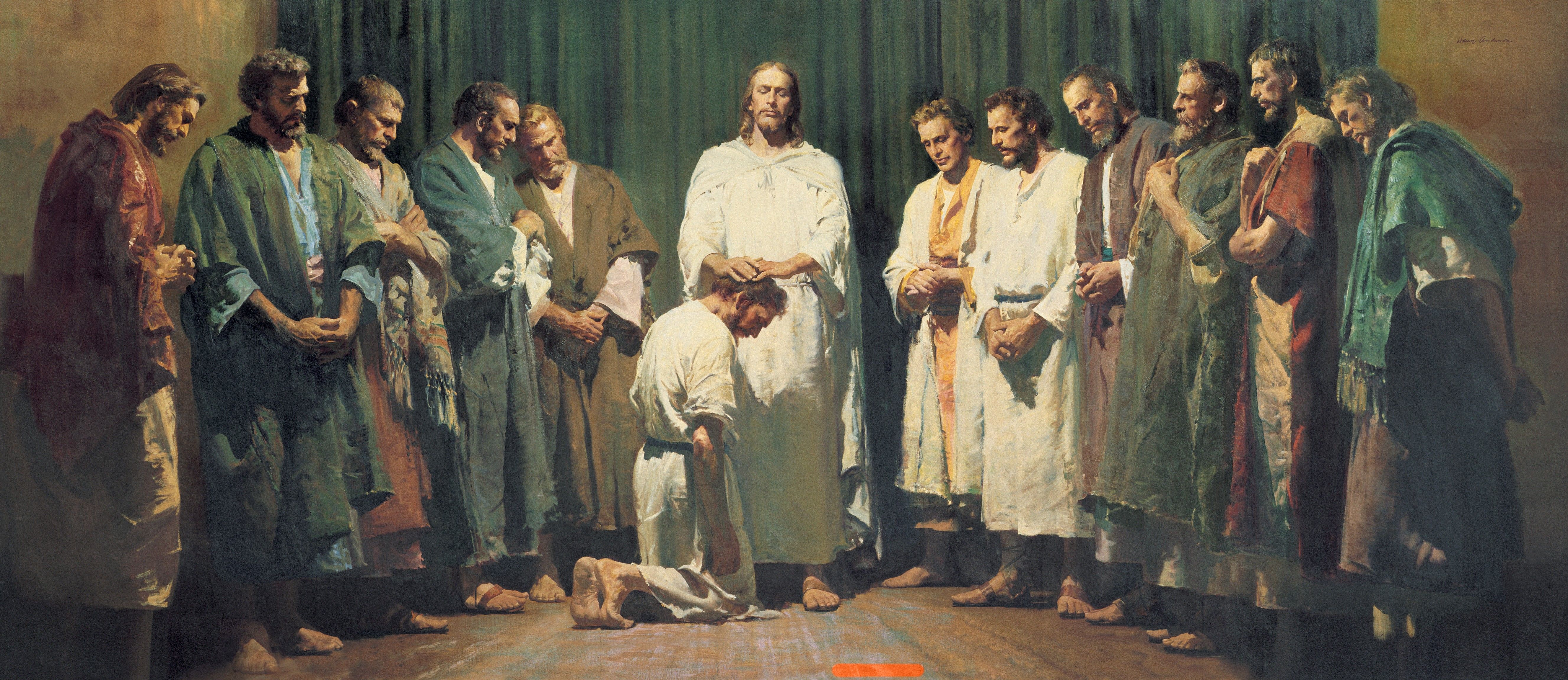
DAY 6 of #100daysofJesus - Christ Ordains Apostles


DAY 6 of #100daysofJesus

Of his disciples, Jesus chose 12 to become his apostles. You may wonder what the difference is between a disciple and an apostle - I think James Talmage described it well:

"Discipleship is general; any follower of a man or devotee to a principle may be called a disciple. The Holy Apostleship is an office and calling belonging to the Higher or Melchizedek Priesthood, at once exalted and specific, comprising as a distinguishing function that of personal and special witness to the divinity of Jesus Christ as the one and only Redeemer and Savior of mankind. The apostleship is an individual bestowal, and as such is conferred only through ordination."

In Matthew 10, Jesus gave his apostles "power against unclean spirits... and to heal all manner of sickness." Mark 3 clarifies that this power was given by ordination.

In Hebrews 5:4 the author describes how priesthood power must be bestowed: "And no man taketh this honor unto himself, but he that is called of God, as was Aaron."

Naturally, the next question is, "how was Aaron called of God?"

We can read about it in Exodus 28. God commanded Moses to call Aaron and ordain him to be a priest. Aaron was called of God through Moses who had previously been called of God. This is how priesthood power and formal ordination is bestowed in Christ's church. Through inspiration from God, someone who has already received the priesthood authority bestows it upon the newly called. The newly called does not take it upon himself.

One of the miracles of the Restoration of Jesus Christ's original church nearly two centuries ago is the restoration of Priesthood power, including the office of the holy Apostleship. I believe that Jesus leads the Church of Jesus Christ of Latter-day Saints today through his prophets and apostles, each of whom was called and ordained as was Aaron.

This process of priesthood bestowal means that any man who holds the priesthood has a line of authority or priesthood lineage through which he can trace his authority back to Jesus Christ. I won't go into that further here, but if you're interested, shoot me a note, and I'd be happy to share my priesthood lineage and how I can trace my priesthood ordinations as an Elder and as a High Priest back to Jesus Christ.

Saturday, October 10, 2020

Day 5 of #100daysofJesus - The Rich, Young Ruler


DAY 5 of #100daysofJesus

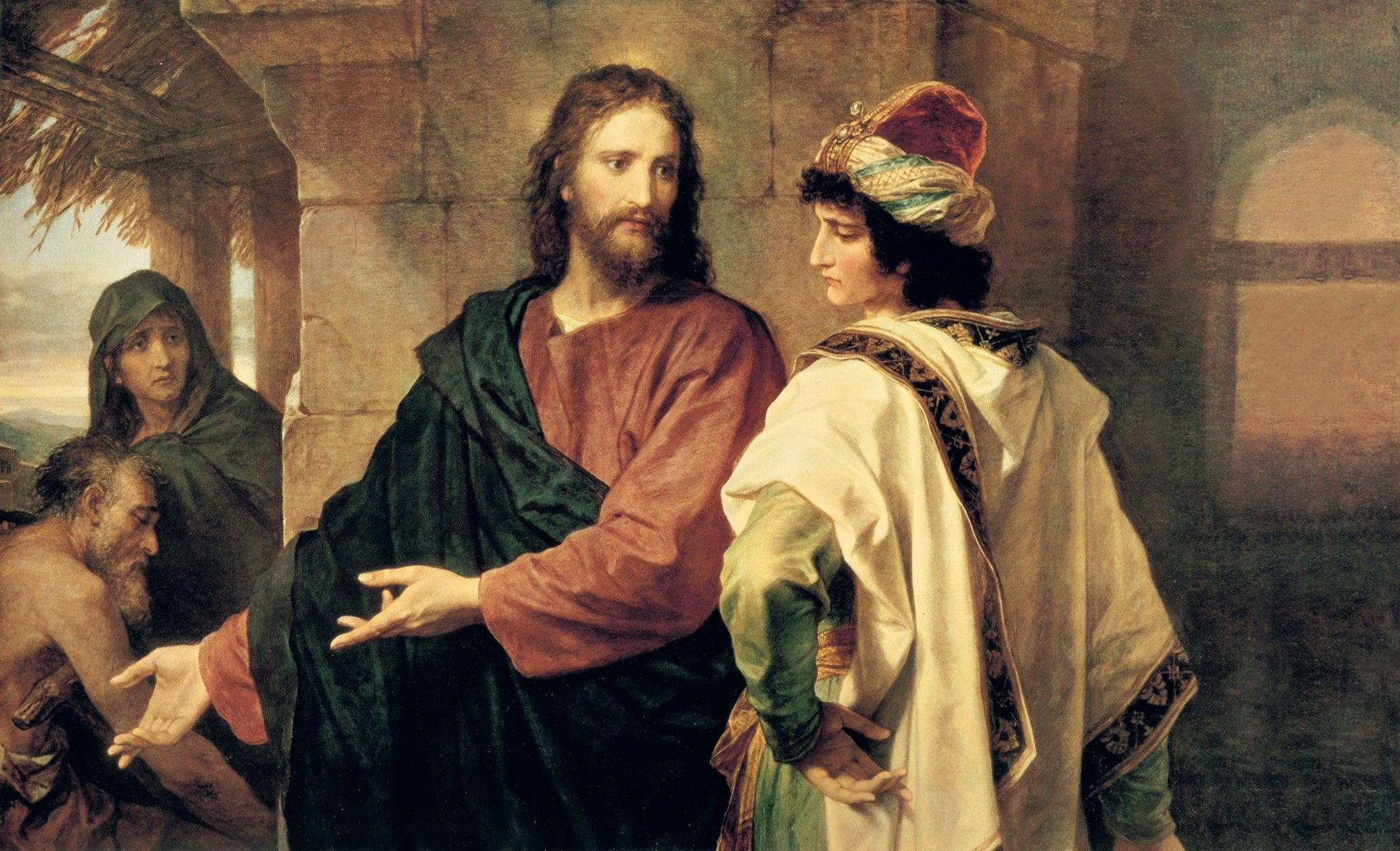
Jesus' interaction with the rich, young ruler suggests that the invitation to follow Him is extended to everyone seeking eternal life.

He sought out Jesus with the sincere and burning question of his soul, "What shall I do to inherit eternal life?" How many of us have wondered that same question!

He tells Jesus that he has kept the commandments, checked all the boxes, and done everything taught under Jewish law. He then asks the important question we should all ask in both serious self-reflection and also earnest prayer, "What lack I yet?"

Mark describes, "Then Jesus beholding him loved him." This sets up the next invitation perfectly because it is clear that Jesus knows this man's heart and what impedes his continued progression. He knew it would be hard to hear, but He loved the man enough to make the invitation. Just as He had invited his disciples, He asks the man to forsake his riches and way of life and "come follow me."

This man was obviously looking for a "3 Simple Steps to Salvation" self-help book. He wasn't looking to make such a sacrifice but rather to check more boxes, and in this he was disappointed.

We don't actually know whether the rich, young ruler eventually chose to heed the call and follow Jesus - only that he "was sad... and went away grieved for he had great possessions."

Do our worldly possessions, titles, and self-importance get in the way of our discipleship? Are we willing to sacrifice to follow Jesus?

When we ask God the question, "What lack I yet?" and hear the response of "come follow me," how will we respond?

Friday, October 9, 2020

DAY 4 of #100daysofJesus - Calling His Disciples


DAY 4 of #100daysofJesus

To me one of the early miracles in the New Testament was Jesus asking various men to essentially drop everything and follow Him - and they actually did it! These men had lives, occupations, hobbies, families, and friends. But they heeded Jesus' invitation. Would we do the same?

To Peter and Andrew, His invitation was simple, "Follow me," and the response was immediate, "they straightway left their nets, and followed him." When Jesus called James and John, they "immediately left the ship and their father, and followed him." These fishermen dropped everything to follow the Savior.

Matthew was sitting in his tax booth collecting taxes when Jesus said to him, "Follow me." As with the fishermen, "he arose, and followed him." In Luke 5 it adds that "he left all." Matthew had a lucrative profession, but that did not stop him from leaving it all behind to heed the Master's call.

The New Testament records additional invitations given to follow Jesus, and they are similarly simple, "Come and see" and "Follow me."

Do you think these disciples had any fear or doubts? Of course they did!

How will I provide for myself and my family?
Is this man Jesus really the Messiah?
And if so, why did he choose ME?
Am I good enough to follow Him?
Where are we going?
What is the plan?
Is this safe?

I love that Luke 5:10 records Jesus' answer to what Simon (and I'm sure the others) must have felt: "Fear not; from henceforth thou shalt catch men." These words must have melted all concerns and worries because the next verse records that the four fishermen "forsook all, and followed him."

It's easy to read the above and think, "but that was just his closest disciples, his apostles; glad it was them and not me!" But don't get too comfortable.

As I will share tomorrow, based on his interaction with the young ruler, His invitation to "follow me" is really for everyone. 

Thursday, October 8, 2020

DAY 3 of #100daysofJesus - Jesus Is Tempted


DAY 3 of #100daysofJesus

After 40 days of fasting, we learn in Matthew 4 that Jesus faced intense temptation from the devil. Jesus was in a hungry and physically weakened state. It's at such times of vulnerability when Satan is most successful at alluring us into succumbing to poor choices, but he would not have success in tempting Jesus.

Satan tempted him to use divine power to satisfy his appetite by turning stone to bread. Next he tempted him with the fame that could be so easily gained by jumping from the pinnacle of the temple and calling upon angels to catch him. Last, he tempted Jesus with wealth, splendor, and earthly glory for the price of worshiping the tempter.

Most of our own temptations tend to fall into these three categories as well: (1) appetites, (2) pride/vanity, or (3) power/wealth.

It's interesting that immediately following Jesus' success in passing these tests, "angels came and ministered unto him." Howard W Hunter once taught:

"As with Jesus, so with us, relief comes and miracles are enjoyed after the trial and temptation of our faith."

The final thought I'd like to share is about a much more devious, insidious temptation, one that is also very applicable to us today. The devil taunted Jesus multiple times with the phrase "if thou be the Son of God." He attacked Jesus' identity, and he is constantly attacking ours.

Do any of these sound familiar?:
- You're not good enough
- You're not pretty enough
- You're not smart enough
- You're not worthy enough

The truth is that YOU ARE ENOUGH because you're a child of God.

We must take comfort in knowing we are sons and daughters of a Heavenly Father who is the God and King of the universe. He has a divine plan for each of us, his beloved children, and He will help us overcome all trials and temptations in this life. Jesus knew who he was and would not be persuaded otherwise. We can likewise conquer with this knowledge of who we are and let that guide how we live our lives. 

Wednesday, October 7, 2020

DAY 2 of #100daysofJesus - Jesus' Baptism


DAY 2 of #100daysofJesus

We often think of baptism as an ordinance performed for the remission of sins, which is true; however, Jesus lived a sinless life. So, why was he baptized?

Jesus told John he needed to be baptized "to fulfil all righteousness" (Matthew 3:15). Jesus would later teach Nicodemus that baptism was a requirement to "enter into the kingdom of God" (John 3:5).

Nephi, a prophet in the Book of Mormon, prophesied and taught of Christ's baptism as well. He taught that Christ humbled himself out of obedience to God and to show us (yes, you and me) the "straitness of the path, and the narrowness of the gate, by which [we] should enter, he having set the example" (2 Nephi 31:7-9).

Jesus' baptism is full of symbolism as well. For example, according to John 1:28, the baptism took place at Bethabara, which means "house of the crossing" and likely refers to the Israelite crossing over into the Promised Land, led by the prophet Joshua (Jesus is the Greek name for Joshua). Of this symbol, Russell M Nelson postulated:

"Could it be that Christ chose this location for His baptism in the River Jordan as a silent commemoration of the crossing of the faithful Israelites under Joshua’s direction so many years before (see Josh. 3), as well as a symbol that baptism is a spiritual crossing into the kingdom of God?"

Jesus clearly taught through both his words and also his example the criticality of baptism. As we follow his example, this becomes our first step towards the Promised Land each of us seeks!