Two Disciples walk and dine with the resurrected Lord as recorded in Luke 24:13-35. What can we learn from this account?
What were these disciples doing at the time they encountered Jesus?
The disciples were discussing and pondering the events of and leading up to the Savior's crucifixion. This is why the Lord "drew near and went with them." As we talk of and ponder about the Savior, we invite him to draw near to us as well.
How did Jesus teach them?
First, he has asked a good open-ended question that allowed the disciples to share what they knew. Then, he met them where they were and expounded the scriptures unto them. He taught the prophesies of the prophets concerning His resurrection and helped them to understand. Our own teaching should be patterned after the Savior; teach people not lessons by starting where they are.
How did the disciples respond to His teachings?
As Jesus was about to depart, "they constrained him, saying, abide with us." They sought for Him to be with them. Do we seek for the Savior to stay with us? Do we make every effort to keep Him with us?
How did they feel when with the Savior?
The scripture describes it best: "Did not our heart burn within us, while he talked with us by the way, and while he opened to us the scriptures?" This burning of their heart is a manifestation of the Holy Ghost, which testifies of truth and testifies of Christ, who is truth. The Holy Ghost can be manifested in many ways, but it is commonly described as a burning within. When we study the scriptures or have spiritual experiences, the Holy Ghost testifies to us of truth, and we feel it inside.
What were they doing when the Savior revealed Himself to them?
Their eyes were opened, and they realized it was the Savior when he "took bread, and blessed it, and brake, and gave to them." Similarly, the Savior will reveal Himself to us as we worthily partake of the sacrament each week. We'll feel his love and know that he is there.
What did they do after learning it was the Savior?
The disciples "rose up that same hour, and returned to Jerusalem" to tell the other disciples and the Apostles that they had seen the resurrected Lord. They had gained a testimony and needed to share it with others. As we are converted to the Lord, we also have a desire to share our testimony with others and to help them become converted.
Wednesday, June 26, 2019


Monday, June 24, 2019
Why was the Savior's Atonement Necessary?
A Fallen World
We live in a fallen world from which we will not escape unscathed by sin. Because of the Fall of Adam and Eve, the natural man of flesh will ensure that all of us make poor choices and commit sin during our mortal sojourn. The only one to ever walk this earth free of sin is Jesus Christ.
The Demands of Justice
The law of justice is an eternal law of consequences that cannot be avoided or nullified. Every action demands a reaction. Every choice we make demands a corresponding consequence. The most harmful consequence of sin is that it distances us from God. On our own, there is no way back to God until justice is satisfied with a punishment we're incapable of paying.
Distanced from God
A fullness of joy and inner peace will only be found when we are close to God. We cannot be truly happy when sin distances us from our Heavenly Father. This applies in the eternities as well. We strive to someday return to God's presence and receive all that he has in store for us, yet we cannot to so if the chasm of sin divides us from Him. The scriptures make it clear that God cannot look upon sin with the least degree of allowance and that in a sinful state we would rather hide ourselves from Him than come into his presence.
The Need for a Mediator
We all sin and fall short of qualifying to be in God's presence. We cannot bridge the gap on our own, which is why a Savior was prepared for us from before the foundation of the world. God knew we would sin and prepared a merciful way forward, a mediator to shield us from the eternal consequences of our mistakes and become our Lord. Rather than answer to the buffeting of Satan and his enslavement in sin, Jesus Christ has stepped in as our mediator, savior, and master.
The Atonement of Jesus Christ
Because justice must be paid, Jesus Christ came to earth as a sinless offering to satisfy the demands of justice for the redemption of all those who will repent and believe on His name.
THIS IS A BIG DEAL!
Without this infinite and eternal sacrifice, we would be lost forever. No event so significant ever has or ever will transpire on this planet! Every prophet since Adam prophesied of and looked forward to the coming of the Messiah. Every prophet since that time has also testified of that sacred event.
What Is Asked of Us?
The Savior simply asks that we repent and believe on Him, that we offer up a broken heart and a contrite spirit. He has already paid the price for our redemption. Now we just need to follow Him.
A Free Gift
Because Jesus broke the bands of death, we too will be resurrected. All of us. This is a free gift for everyone. I believe it's a reward for our choosing to follow Christ before this life. Nobody will be left behind in the grave - we all will have our body and spirit reunited to be brought before the bar of God.
His mercy goes one step further. For those who die before they've reached accountability or who live a lifetime without mental capacity for accountability, Christ's atoning sacrifice saves them. They never willingly transgressed the commandments and therefore need no repentance. Jesus satisfied the demands of justice for them.
It's my testimony that these things are true. I've made many mistakes and have felt the redeeming power of Jesus Christ's atonement in my own life time and time again.
(See 2 Nephi 2:5–10, 17–26; 9:5–26; Alma 34:8–16; 42:9–26.)
Thursday, May 30, 2019
Giving God Your Mite
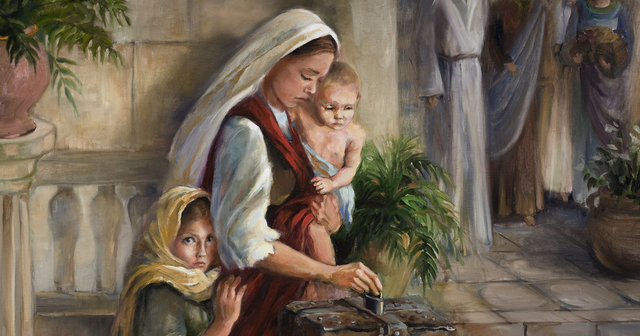
I've often read about the "widow's mite" in the New Testament and thought that it was significant because she was poor and yet still acted obedient in keeping the law of the tithe. This in and of itself is a great example and a fine lesson, but today I understood it a little different.
You know the story:
42 And there came a certain poor widow, and she threw in two mites, which make a farthing.Being all in
43 And he called unto him his disciples, and saith unto them, Verily I say unto you, That this poor widow hath cast more in, than all they which have cast into the treasury:
44 For all they did cast in of their abundance; but she of her want did cast in all that she had, even all her living.
The key phrase that stood out to me is "[she] did cast in all that she had." The widow was all in with her faith and showed it by being all in with everything with which the Lord had blessed her. Are we all in with our faith? Do our daily choices reflect that? Can we be identified as a disciple by our fruits?
Some may think, "well, it's easier to be all in when you're poor." I propose that being all in is the same test and level of difficulty regardless of wealth, popularity, or prominence. In every circumstance it requires faith in the Lord's promised blessings.
The woman giving her all financially must trust completely on the Lord for sustenance. The rich woman giving her all financially would still have to trust completely on the Lord for sustenance, but that's not really what this is about. It's not about selling all that we have and giving to the poor, though that could be required of some; this is about the desires of our hearts.
What is the desire of your heart?
Being all in is giving your heart to the Lord. It all starts with the desires of your heart. King Benjamin told his people to "watch themselves" before telling them to watch their thoughts, words, and deeds. This is because words and deeds come from thoughts and thoughts come from desires. We must be willing to consecrate ourselves - all of our desires - to the Lord and allow Him to make much more of our lives than we ever could on our own.
Only one thing we can truly give
When the Lord owns our desires, the rest (thoughts, words, deeds) will automatically fall into place. We also learned from King Benjamin that we are and always will be unprofitable servants. Anything that we possess and give to the Lord was already his in the first place, except our will or the desires of our heart. God would never take away our agency, so it is truly the only gift that's ours to give.
In the eyes of God, the poor man who consecrates himself (his heart and soul) and everything he has to the Lord to build up His kingdom will always give more than the billionaire who donates millions to the same cause but stops short of fully consecrating his will and desires. This is how the widow's two mites infinitely dwarfs the thousands of mites donated by others. Jesus points her out as our example to follow.
Conclusion
Give your mite to the God by giving your whole self to Him. Kneel down and commit yourself, all the desires of your heart, to the Lord, and then go and do His will. This truly is the only offering you can possibly place on the alter; anything else was first given to you from Him. Be willing to give up anything and everything for God by loving Him first, and then show it with how you live each and every day.
Sunday, May 26, 2019
The Second Coming - Don't Be Deceived
First, what is Joseph Smith Matthew?
Joseph Smith re-translated Matthew chapter 24 of the New Testament, and that translation is what we know today as the book of Joseph Smith Matthew. It's a very important book of scripture that gives prophesies from the Savior himself about the Second Coming, so important that it has been included in the canonized book of scripture known as the Pearl of Great Price.
How does this apply to me?
Within this chapter, Jesus warns that wickedness will abound as it did in the days of Noah. He warns of great signs and wonders that would be performed by false prophets and false Christs insomuch that they would "deceive the very elect, who are the elect according to the covenant." Listen up if you do not want to be deceived (nobody wants to be deceived, right?).
Who are the elect?
So, who are the elect? The children of the covenant! His covenant people have always been the House of Israel, and those baptized into the Church of Jesus Christ of Latter-day Saints are adopted into the House of Israel. If you've received your Patriarchal Blessing, you have a bit more insight into how this applies to you personally.
What does Jesus tell his elect to protect them from deception?
Jesus tells his elect to not be troubled when they hear of wars and rumors of wars for they "must come to pass; but the end is not yet."
Most important of all, the Savior tells his elect the key to avoiding deception. First, his elect will know the prophesies about the Second Coming and be prepared when they they see their fulfillment. Second, He says, "whoso treasureth up my word, shall not be deceived."
What does it mean to "treasure up" Christ's word?
Because treasure is something of great value, we treat it differently than other things. If someone gave you a treasure chest full of gold, silver, and precious stones, how would you take care of it? I'm sure you wouldn't leave it out in the open. You'd also probably be inclined at some point to carefully go through that chest, examining each piece - I know I would. I'd find a special place for the treasure, perhaps for each piece. I'd take care of and protect it. I'd want to share it with those I love as well. A gift like this would change your life.
How do we look at the word of Christ, the scriptures? Do we give it a careful examination? Do we consider it to be of great worth to us? Do we share it with those we love? Do you let it change your life?
It's helpful to consider the words that the Savior didn't use here. He didn't say "whoso readeth my word, shall not be deceived" or "whoso has heard my word" or "whoso has my word on their bookshelf." He uses a word that describes more than even an action like "studying." To "treasure up" connotes a happiness and value. I looked it up in the dictionary and it had two definitions that both fit:
(1) to keep or take great care of something because it is very valuable or important to you
(2) to feel happy, for example because you are doing something that you enjoy
Conclusion
Reading the scriptures is great. Studying the scriptures is even better. Treasuring up the scriptures is ideal and the admonition given by the Savior himself to help us see through the deceit of the adversary at the last day (today!). May we all (myself included) make greater efforts to treasure up the Word of Christ so that we can be prepared for His Second Coming and not be deceived in the meantime.
Wednesday, May 22, 2019
Don't Be a Hypocrite
You've probably heard someone say, "If you're going to talk the talk, you better walk the walk." Or said another way, "practice what you preach." Hypocrisy is when you teach or advocate something publicly and then do not practice it in private.
Jesus is not a fan of hypocrisy (obviously). In fact, he had some pretty harsh words for the pharisees and scribes when he called them out for their hypocrisy:
He did not mince words. One of my favorite of the Savior's metaphors was directed at these hypocritical teachers of the people in Matthew 23:27-28:
He warns his disciples that while they should do many of the things the pharisees and scribes taught (they taught from the scriptures), they should beware to not do the things that they did:
The prophet Abinadi observed the same thing happening with King Noah's wicked priests. He asked them "If ye teach the Law of Moses, why do ye not keep it?"
This seems to be an easy trap to fall into when you're in power and care more about using the Word to stay in power than to serve the Lord. A good leader does the exact opposite. The Lord prescribed this model for leaders:
Lastly, it's not possible to experience an inner peace while living a double-life. When there's a disconnect between your words and your actions, turmoil and uneasiness will be your constant companion. Jesus's invitation to change and repent included the pharisees discussed here, and it includes us.
We can always repent and close the gap between our words and deeds. It's never too late to walk the walk because the Savior has already satisfied the demands of justice for us. Turn to him for He is the way to your inner peace in this life and salvation in the life to come.
Jesus is not a fan of hypocrisy (obviously). In fact, he had some pretty harsh words for the pharisees and scribes when he called them out for their hypocrisy:
"Woe unto you, scribes and Pharisees, hypocrites! ... Ye serpents, ye generation of vipers, how can ye escape the damnation of hell?"
He did not mince words. One of my favorite of the Savior's metaphors was directed at these hypocritical teachers of the people in Matthew 23:27-28:
27 Woe unto you, scribes and Pharisees, hypocrites! for ye are like unto whited sepulchres, which indeed appear beautiful outward, but are within full of dead men’s bones, and of all uncleanness.
28 Even so ye also outwardly appear righteous unto men, but within ye are full of hypocrisy and iniquity.
He warns his disciples that while they should do many of the things the pharisees and scribes taught (they taught from the scriptures), they should beware to not do the things that they did:
"All therefore whatsoever they bid you observe, that observe and do; but do not ye after their works: for they say, and do not."
The prophet Abinadi observed the same thing happening with King Noah's wicked priests. He asked them "If ye teach the Law of Moses, why do ye not keep it?"
This seems to be an easy trap to fall into when you're in power and care more about using the Word to stay in power than to serve the Lord. A good leader does the exact opposite. The Lord prescribed this model for leaders:
"But he that is greatest among you shall be your servant. And whosoever shall exalt himself shall be abased; and he that shall humble himself shall be exalted."This is also important in parenting. Some parents take the approach of telling their kids essentially, "Do as I say and not as I do." Good luck with that. Every child wants to be like his mom or dad. They mimic their parents from a very early age. They try to wear their parents' shoes, and they repeat the phrases their parents use, often to the embarrassment of their parents (my two-year-old is now saying, "what the heck?" ... *face palm*)!
Lastly, it's not possible to experience an inner peace while living a double-life. When there's a disconnect between your words and your actions, turmoil and uneasiness will be your constant companion. Jesus's invitation to change and repent included the pharisees discussed here, and it includes us.
We can always repent and close the gap between our words and deeds. It's never too late to walk the walk because the Savior has already satisfied the demands of justice for us. Turn to him for He is the way to your inner peace in this life and salvation in the life to come.
Sunday, May 19, 2019
This Parable Is Actually about Me
This Parable Is Actually about Me
How often do you read one of the Savior's parables and think that you're the righteous one, the Good Samaritan or the shepherd seeking out the lost sheep? Do you ever think in your mind that the foolish virgin or the prodigal son is someone else? Someone less active in the gospel. I know I've been guilty of that. A comment made in Sunday School helped me realize I've been looking at these parables completely wrong. They're about me.I am the lost sheep
In Luke 15 the Savior shares a parable about a shepherd with 100 sheep, one of which is lost. The shepherd leaves the 99 and searches until he finds the lost sheep. Once found, he carries it on his shoulders rejoicing. How easy is it to assume the lost sheep is the neighbor or friend of yours who is not attending church?The reality is that I am the lost sheep because I make mistakes, mistakes that distance myself from God. I'm in need of daily repentance. I need the Savior to find me, to carry me, to never give up on me. Don't we all?
I am the lost piece of silver
In the same chapter, Luke 15, the Savior shares another parable about something that is lost. This time a woman loses one of her ten pieces of silver. She lights a candle, sweeps the house, and searches diligently until she finds it, rejoicing that it has been found. Isn't it easy to think someone else is the lost piece of silver, waiting to be found, and that we're the woman who must go to the rescue?We do have a responsibility as disciples of Christ to search out the lost sheep and the lost piece of silver. But there's more to this parable than just that. Sometimes I am the lost piece of silver. Sometimes I feel down, hopeless, lost. Don't we all have moments like that? Or days? Weeks? Months? It's so easy to hide, to quietly sit in the back of the room, to go through the motions, to smile like everything is OK when we're feeling empty and lost inside.
Sometimes we need to allow ourselves to be found, to be served, to be lifted. When the candlelight of a concerned family member, ward member, or friend shines on us, seeking us, we must be willing to be found. Why do we have chapels to gather together weekly if not to lift one another? There's a time to lift others and a time to allow others to lift us.
I am the prodigal son
In the Savior's parable of the prodigal son (also in Luke 15), I always figured I was the son who stayed home, who stayed faithful. I applied the parable from that perspective and truly have benefited from what I've learned. The prodigal son receives his inheritance and wastes it away "in riotous living." He hits rock bottom and humbly returns to his father, who receives him with open arms. The father was obviously awaiting the return of his son for "when he was yet a great way off, his father saw him, and had compassion, and ran [to him]."I now realize that I am the prodigal son. I have been given such tremendous blessings in my life. Blessings that I don't feel I've earned but which the Father has entrusted me nonetheless (e.g., my beautiful, incredible, compassionate wife!). Yet I make so many mistakes. I lose my patience. I make selfish choices. I squander opportunities the Lord gives me to progress. I fall short. I'm the one who has to kneel at the end of each day, with humble head bowed, to beg for another chance, to plead for redemption. Through the grace He so fully proffers me, a grace I may never fully comprehend, my Father hears my prayers, and with knowing compassion and love, runs to my aid with open arms.
I am the foolish virgin
In Matthew 25 the Savior taught a parable of ten virgins who awaited the arrival of the bridegroom. The five wise virgins brought sufficient oil for their lamps such that they would be prepared for his late hour arrival. The foolish had insufficient oil and were gone seeking a refill when the bridegroom arrives and shuts them out. I always assumed I was one of the wise virgins and pitied the foolish, but now I see it differently.Oil in the lamp represents faith, testimony, and preparedness, all of which have a very short shelf life. If I'm not constantly refilling my lamp, I quickly begin to run on fumes and can easily run out completely. In this case I am unprepared for the bridegroom. Not just unprepared for the Second Coming, a great advent of which no man knows the timing, but prepared to receive the Savior daily in my life. I've covenanted to take His name upon me and to remember Him. That's a promise to receive Him. He stands at the door and knocks, but am I opening the door of my heart and letting him in? Am I prepared to do so?
I sometimes fail to dedicate the necessary time to refill my lamp. It impacts my day. It can impact my week. When I drop the ball on spiritual preparation or fail to make time to attend the temple, I am not prepared to receive the Savior. This parable is a reminder to me, the foolish one, to do better next time, to try harder, to constantly fill and trim my lamp, to always be prepared.
Conclusion
The Savior's parables humble and instruct me.I am the slothful servant who buries my talent.
My heart can be the stony ground, the thorny grown, or the wayside, unprepared for the seed.
I am the unforgiving debtor.
I am the prideful, hypocritical pharisee.
I hide my face as I pass by the wounded man on the road to Damascus.
The list goes on...
Please don't interpret my thoughts as self-loathing. I write in the spirit of self-reflection with a greater self-awareness. We can all do better, and there is so much to learn from the parables in the New Testament as we study them with eyes to see and ears to hear. When I put myself in the shoes of the sinner in these parables (aren't we all sinners?), my eyes are opened to the true dependence I have on the Savior, Jesus Christ. I recognize how critical His mercy is to my progression and my salvation. I feel closer to Him, more grateful for Him. I feel an urgency to do better, and because of Him, I can.
Saturday, May 18, 2019
The Simplicity on the Other Side of Complexity
"I would not give a fig for the simplicity this side of complexity, but I would give my life for the simplicity on the other side of complexity." -Oliver Wendell Holmes Jr.
Adam and Eve
Adam and Eve experienced the simplicity on this side of complexity as they lived blissfully in the Garden of Eden. Life was easy.When they were cast out of the Garden, the simplicity was replaced with complexity. By the sweat of their brow they had to toil for every meal. Thistles and thorns and all the dangers of a telestial world threatened them. A son killed his brother. Even their spiritual lives were fraught with complexity as they were given commandments without understanding the "why":
6 And after many days an angel of the Lord appeared unto Adam, saying: Why dost thou offer sacrifices unto the Lord? And Adam said unto him: I know not, save the Lord commanded me.
7 And then the angel spake, saying: This thing is a similitude of the sacrifice of the Only Begotten of the Father, which is full of grace and truth. (Moses 5:6-7)However, were it not for their experience and struggle with the complexity, they never would have discovered the simplicity on the other side of complexity, and it was all worth it. Hear what they had to say:
10 And in that day Adam blessed God and was filled, and began to prophesy concerning all the families of the earth, saying: Blessed be the name of God, for because of my transgression my eyes are opened, and in this life I shall have joy, and again in the flesh I shall see God.
11 And Eve, his wife, heard all these things and was glad, saying: Were it not for our transgression we never should have had seed, and never should have known good and evil, and the joy of our redemption, and the eternal life which God giveth unto all the obedient. (Moses 5:10-11)
The Faith Journey
Simply put, our faith does not stand still; it has a very short shelf-life. Faith also has an interesting life-cycle, as we saw in the example of Adam and Eve. A similar pattern often happens with missionaries or college students as they leave the simplicity of youthful faith and are faced with complexities and ambiguities, sometimes for the first time in their lives.When we notice the gap between the ideal and the real, it can be tough. For example, realizing the youth leader (or bishop or parent) that we idolized as a kid is a fallible human being, just like us, it can be tough. When we learn that our fellow missionaries are imperfect, just like us, it can be tough. When we first encounter an aspect of church history that is difficult to understand, or we are faced with doubts that come from the growing chasm between the Church and the world, it can certainly be tough.
These faith challenges, like any challenge in life, are ultimately for our benefit and can strengthen us if we learn and grow from them. When we arrive at the other side of the complexity, having overcome with the Lord's help, we look back and see the benefit of the complexity. As Holmes suggests, the clarity on the other side of complexity is worth the cost - worth every complexity we face.
My Encouragement
To those currently on this side of complexity, where simplicity exists because life is smooth-sailing, I warn that complexity will inevitably come. Complexity is a requirement of mortality because it facilitates personal growth. We cannot remain innocent in the Garden of Eden forever, as fun as that may sound, because we will never become who God intends us to become. Brace yourself. Make a choice to doubt your doubts before you doubt your faith, and when challenged, cling to the testimony you've already gained.To those who are currently in the midst of complexity, don't ever forget that God loves you. He is aware of you and will turn this complexity into a blessing you cannot yet begin to comprehend. Hang in there. The clarity on the other side of complexity is worth the struggle.
You have friends and loved ones who will help you, so don't be afraid to ask for help. Ask your questions. Bring up your concerns. And most importantly, you have a Savior who perfectly understands your challenges, and His hand of mercy is always stretched out toward you. He truly stands at the door and knocks; all you have to do is open your heart and your mind to Him.
And finally, to those who have found the simplicity on the other side of complexity, please realize that complexities never truly end. I still have questions that I haven't found good answers to, but they don't cause me to question what I do know. Don't take the simplicity for granted. Be kind and especially mindful of those in the midst of their complexity. Help them get to the other side without judgment. Give others hope by sharing the peace and confidence that comes with the simplicity of the other side of complexity.
Conclusion
If you've ever heard someone share their testimony about the joy of living the gospel or about how simple the gospel is or about how "it all just makes sense," that's the fruit of the simplicity on the other side of complexity. That joy, peace, and confidence is real. You can have it in your life as well. It's only possible through the atoning sacrifice of our Savior, Jesus Christ, an atonement that was made for you. His grace is sufficient for you, and His intention is to get you there.Acknowledgment
I appreciate the words of Elder and Sister Hafen that have helped me understand the principles outlined above. I recently read their book Faith Is Not Blind, listened to some podcast interviews they did on the Leading Saints podcast, and read the devotional address Elder Hafen gave at BYU 30 years ago.
Sunday, October 23, 2016
The Gamble of Unbelief
THE GAMBLE OF UNBELIEF
By Brad Morgan
If the grave is the end
And judgement day a myth,
What does it matter how we live?
If the grave is but a sleep
And immortality awaits us,
What matters more than how we live?
If the grave is the end
And it mattered not how we lived,
We'll never know how we lived.
If the grave is but a sleep
and judgement awaits every deed,
How will we wish we had lived?
By Brad Morgan
If the grave is the end
And judgement day a myth,
What does it matter how we live?
If the grave is but a sleep
And immortality awaits us,
What matters more than how we live?
If the grave is the end
And it mattered not how we lived,
We'll never know how we lived.
If the grave is but a sleep
and judgement awaits every deed,
How will we wish we had lived?
Monday, September 26, 2016
What Our Prophet Taught in April 2016
President Monson's remarks were brief, largely due to his failing health, however he did give some great council that we should take to heart. Below are a few of the things that he said:
- "We are the recipients of a sacred trust [as Priesthood holders]. Much is expected of us."
- We must guard/protect this Priesthood and be worthy of its blessings.
- "Before you put yourself and your priesthood in jeopardy by venturing into places or participating in activities which are not worthy of you or of that priesthood, pause to consider the consequences."
- "Remember who you are and what God expects you to become. You are a child of promise. You are a man of might. You are a son of God."
- We must always be worthy to use the Priesthood for we never know when we will be called upon to use it!
- "It has been said that the door of history turns on small hinges, and so do people’s lives. The choices we make determine our destiny."
- "May we choose to build up within ourselves a great and powerful faith which will be our most effective defense against the designs of the adversary—a real faith, the kind of faith which will sustain us and will bolster our desire to choose the right. Without such faith, we go nowhere. With it, we can accomplish our goals."
- Use the gift of repentance when you fall short.
- "May we maintain the courage to defy the consensus. May we ever choose the harder right instead of the easier wrong."
- Always choose Christ.
From the following talks in the April 2016 General Conference:
Tuesday, September 20, 2016
Learn from Moronihah: Protect the Center of the Land
We can learn much from Moronihah's costly blunder, described in Helaman 1:26:
26 For behold, Moronihah had supposed that the Lamanites durst not come into the center of the land, but that they would attack the cities round about in the borders as they had hitherto done; therefore Moronihah had caused that their strong armies should maintain those parts round about by the borders.
A few lessons:
- Satan knows where our weaknesses are and is unafraid to hit us there. And by unafraid I mean he is eager to and inevitably will hit us there. If we are super fortified in the area of the Word of Wisdom but weaker in the Law of Chastity, for example, then Satan's efforts will focus more around inappropriate thoughts than around trying an illegal drug.
- We must remain vigilant to avoid being taken by surprise temptations. The Savior taught, "Behold, verily, verily, I say unto you, ye must watch and pray always lest ye enter into temptation; for Satan desireth to have you, that he may sift you as wheat." 3 Nephi 18:18
- Every effort should be made to have the companionship of the Holy Ghost and be able to receive inspiration. It's hard to imagine this sort of breach happening to Moronihah's father, Moroni, because he was an inspired leader and always one step ahead of the Lamanites.
- At the time that the Lamanites successfully took Zarahemla in the heart of the land, the Nephites were experiencing internal struggles, largely due to the secret acts of wickedness committed by Kiskumen and his cohorts. They had just murdered the chief judge and were mingling with the population. This wickedness in the heart of the land was a big factor in the Nephite's unpreparedness for the Lamanite attack.
- No matter how well we appear prepared on the outside because we attend church, fulfill callings, serve others, etc, if our hearts are not sincere, our faith is not strong, and our conversion is not deep, then we are vulnerable to similar attacks. One interesting lesson from the Armor of God analogy found in the scriptures is that the Shield of Faith can be used as a mobile defense to protect any weak or vulnerable area of the body from oncoming attack.
Monday, September 19, 2016
Be a Latter-day Stripling Warrior
As we discussed the Book of Mormon story of Helaman's stripling warriors, it hit me that this was included in the scriptures because it relates to us today in a powerful way. Like these young boys, each of us will face difficult battles. None of us will escape injury, but all of us can be saved through faith in Christ that leads us to spiritual preparation. This account also exemplifies the importance of teaching our children the gospel to prepare them for the battles they'll inevitably face.
We must face our trials - the battles of life - with faith and confidence. The stripling warriors had grown up in a pacifist community with parents that had covenanted to never fight again. They had never lifted swords previously, but this was their response in Alma 56:46: "behold our God is with us, and he will not suffer that we should fall; then let us go forth".
We must be selfless and willing to give our lives in service to others. I think those who join the military to protect the freedoms we enjoy in this country exemplify this same spirit, but we can also have this attitude in other areas of our lives. Look for ways to serve others. In Alma 56:47 we read, "and they did think more upon the liberty of theirfathers than they did upon their lives."
Teaching our children is so important! This is what these young warriors said about their mothers: "they had been taught by their mothers, that if they did not doubt, God would deliver them. And they rehearsed unto me the words of their mothers, saying: We do not doubt our mothers knew it." Alma 56:47-48
Here is the result of their great faith: "behold, to my great joy, there had not one soul of them fallen to the earth; yea, and they had fought as if with the strength of God; yea, never were men known to have fought with such miraculous strength; and with such mighty power did they fall upon the Lamanites, that they did frighten them." Alma 56:56. These young men had never fought before, but they were filled with the strength of God to overcome overwhelming odds. Whenever we are on the Lord's side, there be more with us than against us regardless of what it may look like with our physical eyes.
In a later battle, they were again very outnumbered. While many of the Nephites were "about to give way" these stripling warriors "did obey and observe to perform every word of command with exactness; yea, and even according to their faith it was done unto them." This faith and obedience miraculously saves their lives in this battle. Helaman describes the result:
Similarly, we will not escape life's battles without injury; however, we can fight these battles in full confidence that through faith and obedience everything will work out alright. Helaman arrives at the same conclusion as he wraps up his epistle to Moroni by describing the miracle of the stripling warriors: "And those sons of the people of Ammon ... are with me in the city of Manti; and the Lord has supported them, yea, and kept them from falling by the sword, insomuch that even one soul has not been slain. But behold, they have received many wounds; nevertheless they stand fast in that liberty wherewith God has made them free; and they are strict to remember the Lord their God from day to day; yea, they do observe to keep his statutes, and his judgments, and his commandments continually; and their faith is strong in the prophecies concerning that which is to come." Alma 58:39-40
Let us be like the stripling warriors!
We must face our trials - the battles of life - with faith and confidence. The stripling warriors had grown up in a pacifist community with parents that had covenanted to never fight again. They had never lifted swords previously, but this was their response in Alma 56:46: "behold our God is with us, and he will not suffer that we should fall; then let us go forth".
We must be selfless and willing to give our lives in service to others. I think those who join the military to protect the freedoms we enjoy in this country exemplify this same spirit, but we can also have this attitude in other areas of our lives. Look for ways to serve others. In Alma 56:47 we read, "and they did think more upon the liberty of theirfathers than they did upon their lives."
Teaching our children is so important! This is what these young warriors said about their mothers: "they had been taught by their mothers, that if they did not doubt, God would deliver them. And they rehearsed unto me the words of their mothers, saying: We do not doubt our mothers knew it." Alma 56:47-48
Here is the result of their great faith: "behold, to my great joy, there had not one soul of them fallen to the earth; yea, and they had fought as if with the strength of God; yea, never were men known to have fought with such miraculous strength; and with such mighty power did they fall upon the Lamanites, that they did frighten them." Alma 56:56. These young men had never fought before, but they were filled with the strength of God to overcome overwhelming odds. Whenever we are on the Lord's side, there be more with us than against us regardless of what it may look like with our physical eyes.
In a later battle, they were again very outnumbered. While many of the Nephites were "about to give way" these stripling warriors "did obey and observe to perform every word of command with exactness; yea, and even according to their faith it was done unto them." This faith and obedience miraculously saves their lives in this battle. Helaman describes the result:
25 And it came to pass that there were two hundred, out of my two thousand and sixty, who had fainted because of the loss of blood; nevertheless, according to the goodness of God, and to our great astonishment, and also the joy of our whole army, there was not one soul of them who did perish; yea, and neither was there one soul among them who had not received many wounds.
26 And now, their preservation was astonishing to our whole army, yea, that they should be spared while there was a thousand of our brethren who were slain. And we do justly ascribe it to the miraculous power of God, because of their exceeding faith in that which they had been taught to believe—that there was a just God, and whosoever did not doubt, that they should be preserved by his marvelous power.
27 Now this was the faith of these of whom I have spoken; they are young, and their minds are firm, and they do put their trust in God continually. Alma 57:25-27
Similarly, we will not escape life's battles without injury; however, we can fight these battles in full confidence that through faith and obedience everything will work out alright. Helaman arrives at the same conclusion as he wraps up his epistle to Moroni by describing the miracle of the stripling warriors: "And those sons of the people of Ammon ... are with me in the city of Manti; and the Lord has supported them, yea, and kept them from falling by the sword, insomuch that even one soul has not been slain. But behold, they have received many wounds; nevertheless they stand fast in that liberty wherewith God has made them free; and they are strict to remember the Lord their God from day to day; yea, they do observe to keep his statutes, and his judgments, and his commandments continually; and their faith is strong in the prophecies concerning that which is to come." Alma 58:39-40
Let us be like the stripling warriors!
Monday, September 12, 2016
Moroni's Response to the Cunning Flattery of Amalickiah
In Alma 46, we read of Amalickiah "a man of cunning device and a man of many flattering words" who "led away the hearts of many people to do wickedly" and "[sought] to destroy the church of God, and to destroy the foundation of liberty which God had granted [the Nephites]." Amalickiah caused dissensions in the church as well as a rift in the government.
How did Moroni, the military leader of the Nephites, respond to this?
When people get prideful, caught up in the newest trends or movements, and begin to fight against that which is good, it is because they have forgotten what really matters. The best weapon to combat this is to help them remember what truly matters.
So what was the result? After Moroni "went forth among the people, waving the rent part of his garment in the air, that all might see the writing which he had written upon the rent part, and crying with a loud voice, saying: Behold whosoever will maintain this title upon the land, let them come forth in the strength of the Lord...and it came to pass that when Moroni had proclaimed these words, behold, the people came running together" to make a covenant with God.
People will rally around the truth, and the truth is the only way to cut through the deceitful evil of people like Amalickiah who quickly blind the eyes with cunning flattery.
How did Moroni, the military leader of the Nephites, respond to this?
Moroni chose to combat the wicked tactics of the persuasive Amalickiah by helping the people remember what really matters: God, religion, freedom, peace, and family. He knew that the people would rally around this truth and be willing to do whatever it took to defend what truly matters.12 And it came to pass that he rent his coat; and he took a piece thereof, and wrote upon it—In memory of our God, our religion, and freedom, and our peace, our wives, and our children—and he fastened it upon the end of a pole.13 And he fastened on his headplate, and his breastplate, and his shields, and girded on his armor about his loins; and he took the pole, which had on the end thereof his rent coat, (and he called it the title of liberty) and he bowed himself to the earth, and he prayed mightily unto his God for the blessings of liberty to rest upon his brethren, so long as there should a band of Christians remain to possess the land—
When people get prideful, caught up in the newest trends or movements, and begin to fight against that which is good, it is because they have forgotten what really matters. The best weapon to combat this is to help them remember what truly matters.
So what was the result? After Moroni "went forth among the people, waving the rent part of his garment in the air, that all might see the writing which he had written upon the rent part, and crying with a loud voice, saying: Behold whosoever will maintain this title upon the land, let them come forth in the strength of the Lord...and it came to pass that when Moroni had proclaimed these words, behold, the people came running together" to make a covenant with God.
People will rally around the truth, and the truth is the only way to cut through the deceitful evil of people like Amalickiah who quickly blind the eyes with cunning flattery.
Sunday, September 11, 2016
Corrupted by Promises of Power: The Craft of Amalickiah
We observe an interesting process in Alma 46 that is certainly not unique to the Nephites nor to that time period. A power hungry man named Amalickiah desires to be king, so he goes around to those who have some small degree of political power (the lower judges) and flatters them, promising them high leadership positions if they will support him in his campaign. Amalickiah knows and exploits their natural weakness for craving power and influence.
These lower judges were chosen by the voice of the people, who likely selected them because of their values and good standing in the community. It's quite possible that these lower judges agreed to public service to do just that - serve - rather than seek for power. However, they became corrupted when they hearkened to Amalickiah's untruthful promises of power. Mormon narrates that these lower judges were "led by the flatteries of Amalickiah...they were led away by Amalickiah to dissensions..." Before long, these judges who were appointed to support the democratic liberty of the people, support Amalickiah and the foundational change in government from democracy to monarchy.
Not only is this a historical account, but it can also serve as allegory for us in our lives. Amalickiah typifies the adversary. He seeks to reign at the expense of our freedom. He whispers flattering lies in our ears hoping to persuade us to follow him. If we choose to listen, we are "led away" by our choices into the destruction of our liberty. It's important to note that Amalickiah fails to deliver just as Satan always fails to deliver on his evil promises.
Another application or warning from this account would be current American politics. It's hard to read this and not think of the corruption caused by the flattering promises of political candidates, the influence of lobbyists, and rampant cronyism.
These lower judges were chosen by the voice of the people, who likely selected them because of their values and good standing in the community. It's quite possible that these lower judges agreed to public service to do just that - serve - rather than seek for power. However, they became corrupted when they hearkened to Amalickiah's untruthful promises of power. Mormon narrates that these lower judges were "led by the flatteries of Amalickiah...they were led away by Amalickiah to dissensions..." Before long, these judges who were appointed to support the democratic liberty of the people, support Amalickiah and the foundational change in government from democracy to monarchy.
Not only is this a historical account, but it can also serve as allegory for us in our lives. Amalickiah typifies the adversary. He seeks to reign at the expense of our freedom. He whispers flattering lies in our ears hoping to persuade us to follow him. If we choose to listen, we are "led away" by our choices into the destruction of our liberty. It's important to note that Amalickiah fails to deliver just as Satan always fails to deliver on his evil promises.
Another application or warning from this account would be current American politics. It's hard to read this and not think of the corruption caused by the flattering promises of political candidates, the influence of lobbyists, and rampant cronyism.
Sunday, August 28, 2016
Ponderize: Charity and Virtue - D&C 121:45
In D&C 121, we read these inspired words penned by the Prophet, Joseph Smith:
Charity
First and foremost we must have charity, which is a gift from God, and one that we must diligently seek to obtain (see Moroni 7:44-48). This verse reminds me to seek for charity, to look at all of God's children from a viewpoint of love, and if possible to see them as He does.
Virtue
To be virtuous is to do the right thing when no one is looking, and this can be no truer than in our own thoughts. Only God knows our thoughts, so having virtuous thoughts becomes one of the true tests of life. The goal is to have pure, virtuous, positive thoughts unceasingly, which seems an impossible task but one for which this verse strengthens me.
Confidence
There is a real power that comes into our lives when we know that God is pleased with our efforts. The peace that comes from knowing our lives are in alignment with God's will is inexplicable and something all people seek. This verse teaches how we can achieve this. I've experienced this at times in my life, and this verse helps me focus on areas of my life that can help me have this confidence and peace more frequently.
Priesthood
How beautiful and poetic is this phrase: "and the doctrine of the priesthood shall distil upon thy souls as the dews from heaven." This is another benefit of living with charity and virtue - an understanding of the Priesthood. I don't think I've arrived in this regard as there is so much more for me to know and learn, but as this verse suggests, it is a gradual process that takes time. This understanding "distils" upon our souls. For those who may not think this promise is a big deal, realize that the Priesthood is God's power through which the earth, the universe and even all of the workmanship of God's hands were created.
Holy Ghost
The companionship of the Holy Ghost is another powerful and very real blessing that can be ours if we can live with charity and virtue. His guidance can help us in all aspects of our lives, not just the spiritual, as He opens our minds and increases our ability to learn and remember. The Holy Ghost brings us comfort and peace. He can "show [us] all things what [we] should do." (2 Ne 32:5).
As Elder Richard G Scott suggested a few years ago, this passage of scripture has become a dear friend. It is one that I can recall at any time to refocus on what really matters.
45 Let thy bowels also be full of charity towards all men, and to the household of faith, and let virtue garnish thy thoughts unceasingly; then shall thy confidence wax strong in the presence of God; and the doctrine of the priesthood shall distil upon thy soul as the dews from heaven.I chose to memorize this passage because of the strength it gives me in multiple important areas.
46 The Holy Ghost shall be thy constant companion...
Charity
First and foremost we must have charity, which is a gift from God, and one that we must diligently seek to obtain (see Moroni 7:44-48). This verse reminds me to seek for charity, to look at all of God's children from a viewpoint of love, and if possible to see them as He does.
Virtue
To be virtuous is to do the right thing when no one is looking, and this can be no truer than in our own thoughts. Only God knows our thoughts, so having virtuous thoughts becomes one of the true tests of life. The goal is to have pure, virtuous, positive thoughts unceasingly, which seems an impossible task but one for which this verse strengthens me.
Confidence
There is a real power that comes into our lives when we know that God is pleased with our efforts. The peace that comes from knowing our lives are in alignment with God's will is inexplicable and something all people seek. This verse teaches how we can achieve this. I've experienced this at times in my life, and this verse helps me focus on areas of my life that can help me have this confidence and peace more frequently.
Priesthood
How beautiful and poetic is this phrase: "and the doctrine of the priesthood shall distil upon thy souls as the dews from heaven." This is another benefit of living with charity and virtue - an understanding of the Priesthood. I don't think I've arrived in this regard as there is so much more for me to know and learn, but as this verse suggests, it is a gradual process that takes time. This understanding "distils" upon our souls. For those who may not think this promise is a big deal, realize that the Priesthood is God's power through which the earth, the universe and even all of the workmanship of God's hands were created.
Holy Ghost
The companionship of the Holy Ghost is another powerful and very real blessing that can be ours if we can live with charity and virtue. His guidance can help us in all aspects of our lives, not just the spiritual, as He opens our minds and increases our ability to learn and remember. The Holy Ghost brings us comfort and peace. He can "show [us] all things what [we] should do." (2 Ne 32:5).
As Elder Richard G Scott suggested a few years ago, this passage of scripture has become a dear friend. It is one that I can recall at any time to refocus on what really matters.
Friday, February 5, 2016
Choose Eternal Life
Lehi teaches his family the Plan of Salvation, and gives a powerful testimony of agency and the importance of choosing to follow the Gospel of Jesus Christ. I think 2 Nephi 2:27 is powerful as it clearly illustrates the destination we will attain depending on our use of agency. Lehi says:
Wherefore, men are free according to the flesh; and all things are given them which are expedient unto man. And they are free to choose liberty and eternal life, through the great Mediator of all men, or to choose captivity and death, according to the captivity and power of the devil; for he seeketh that all men might be miserable like unto himself.
After describing this choice to his sons, he exhorts them to "look to the great Mediator, and hearken unto his great commandments; and be faithful unto his words." Then with the pleadings of a loving parent who knows he will soon pass away, Lehi says, "choose eternal life."
It's true that this may seem overly simplistic. We don't just decide, "I'm going to choose eternal life," and then we're set. But along with this simple plea, he does provide instruction for accomplishing this important goal. He points his sons to the Savior, Jesus Christ, and he exhorts them to obey the commandments. This reminds me of the third article of faith: We believe that through the atonement of Christ, all mankind may be saved, by obedience to the laws and ordinances of the Gospel.
Turn to Christ and obey His commandments. Choose Eternal Life!
Thursday, February 4, 2016
Cleave Unto Your Covenants
In D&C 25:13, the Lord tells Emma Smith to "cleave unto the covenants which [she had] made." In thinking about what it means to cleave unto our covenants, I wanted to explore where the word cleave is used throughout the scriptures. A search turned up 54 hits, and here are a selection of these:
- Abhor that which is evil; cleave to that which is good. (Romans 12:9)
- Ye that did cleave unto the Lord your God are alive every one of you this day. (Deuteronomy 4:4)
- Thou shalt love thy wife with all thy heart, and shalt cleave unto her and none else. (D&C 42:22)
- Therefore shall a man leave his father and his mother, and shall cleave unto his wife: and they shall be one flesh. (Genesis 2:24)
- ...exhorted them all, that...they would cleave unto the Lord. (Acts 11:23)
- But cleave unto the Lord your God, as ye have done unto this day. (Joshua 23:8)
- Ye shall walk after the Lord your God, and fear him, and keep his commandments, and obey his voice, and ye shall serve him, and cleave unto him. (D&C 13:4)
- Wherefore, cleave unto charity, which is the greatest of all... (Moroni 7:46)
- Cleave unto me with all your heart. (D&C 11:19)
- They who have faith in him will cleave unto every good thing. (Moroni 7:28)
- Forsake all evil and cleave unto all good. (D&C 98:11)
- Except they should cleave unto the Lord their God they must unavoidably perish. (Helaman 4:25)
- The Lord
- Our spouse / family
- Our Covenants
- Charity
- Every good thing
What great perspective! Aligning our personal goals and priorities with these five areas pretty much sums up what it means to live the gospel of Jesus Christ.
Monday, February 1, 2016
Warning: Avoid Lazy Faith
We are familiar with the story of the Lord commanding Nephi to build a ship for his family to cross the ocean found in 1 Nephi 17. One thing I hadn't previously caught when reading this story was some of the reasoning behind Laman and Lemuel's murmuring and unbelief that Nephi was instructed of the Lord to build a ship.
Check out verse 18: "And thus my brethren did complain against me, and were desirous that they might not labor, for they did not believe that I could build a ship; neither would they believe that I was instructed of the Lord."
Laman and Lemuel were being lazy (desirous that they might not labor)! They realized that if they believed the Lord had commanded Nephi to build the ship, then they would have to offer their help and have to labor with him in this effort. So, this led them to doubt, question, complain, and mock.
I worry that far too many people fall into this same trap today. If you believe the gospel of Jesus Christ is true, then you become obligated to live according to that gospel. For members of the Church of Jesus Christ of Latter-day Saints, that means living the word of wisdom, law of chastity, keeping the Sabbath day holy, and many other commandments. The easier and lazier approach is to not fully believe the truth so that you're off the hook in having to fully live it.
The catch is that it's either true or it is not true, and the easy/lazy approach is only valid if it's not true. For most who face this "dilemma," they've already received a witness that it was true, a witness from God - just like Laman and Lemuel had many times previously. Laman and Lemuel were fortunate though because Nephi really did need their help. God gave Nephi power to shake/shock them, which made them believe so that they would help him out.
Most of us today are not so fortunate. There may not be a shake or shock to jolt us back to reality and get us on the right path, and do we really want one? How often have you heard the story of a man who chooses not to believe, stops going to church, hits a low point in his life, and then has a sudden tragedy occur (death of a wife, parent, child, etc) that brings him back to God?
I think the subtle lesson here is to beware of this temptation of the adversary. He wants us to look for the path of least resistance. Taking the easy way out in life means denying Christ and His truth. Instead, step up and love God. Keep His commandments, and do everything you can to serve Him and those around you. This is the difference between a Nephi attitude and a Laman attitude.
Check out verse 18: "And thus my brethren did complain against me, and were desirous that they might not labor, for they did not believe that I could build a ship; neither would they believe that I was instructed of the Lord."
Laman and Lemuel were being lazy (desirous that they might not labor)! They realized that if they believed the Lord had commanded Nephi to build the ship, then they would have to offer their help and have to labor with him in this effort. So, this led them to doubt, question, complain, and mock.
I worry that far too many people fall into this same trap today. If you believe the gospel of Jesus Christ is true, then you become obligated to live according to that gospel. For members of the Church of Jesus Christ of Latter-day Saints, that means living the word of wisdom, law of chastity, keeping the Sabbath day holy, and many other commandments. The easier and lazier approach is to not fully believe the truth so that you're off the hook in having to fully live it.
The catch is that it's either true or it is not true, and the easy/lazy approach is only valid if it's not true. For most who face this "dilemma," they've already received a witness that it was true, a witness from God - just like Laman and Lemuel had many times previously. Laman and Lemuel were fortunate though because Nephi really did need their help. God gave Nephi power to shake/shock them, which made them believe so that they would help him out.
Most of us today are not so fortunate. There may not be a shake or shock to jolt us back to reality and get us on the right path, and do we really want one? How often have you heard the story of a man who chooses not to believe, stops going to church, hits a low point in his life, and then has a sudden tragedy occur (death of a wife, parent, child, etc) that brings him back to God?
I think the subtle lesson here is to beware of this temptation of the adversary. He wants us to look for the path of least resistance. Taking the easy way out in life means denying Christ and His truth. Instead, step up and love God. Keep His commandments, and do everything you can to serve Him and those around you. This is the difference between a Nephi attitude and a Laman attitude.
Subscribe to:
Comments (Atom)
